How Fair Queuing Works for Australian Events in 2026
The moment tickets go live for a genuinely hot event, a few thousand people do the same thing at once: they mash the refresh button like it's a claw machine. A ticket queue is the thing standing between that stampede and your event page falling over in the first ninety seconds. It sorts everyone into an orderly line instead of a bar fight.
Here's how fair queuing actually works, why "whoever refreshes hardest wins" is a rubbish way to sell a ticket, and when you genuinely don't need any of it.
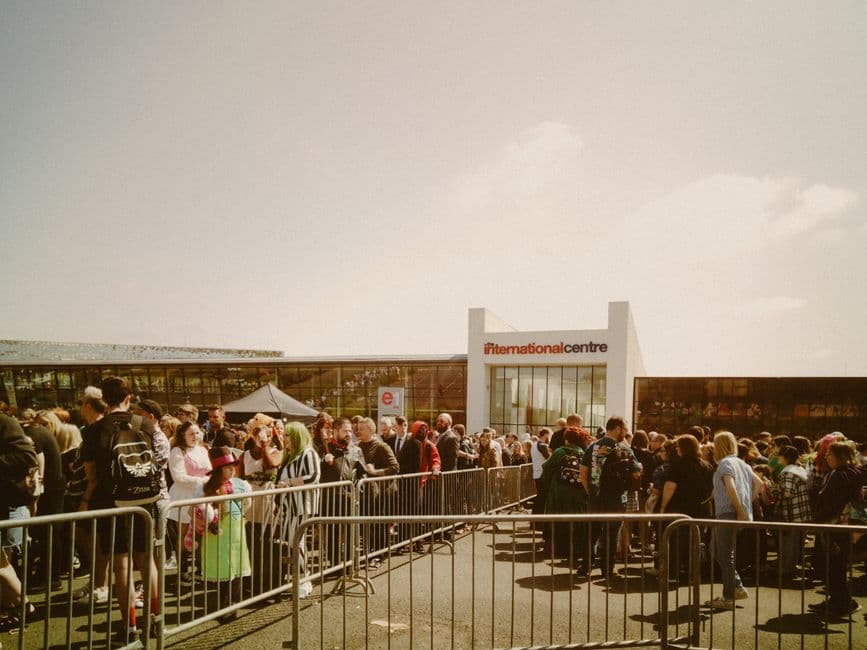
What a fair queue actually is
A ticket queue is a virtual waiting room. When more people want in than your page (or your ticket stock) can handle at once, the queue holds them in a line and releases them in small batches to the checkout.
Think of it as a bouncer with a clipboard, except the clipboard actually works and nobody's queue-jumping. (I've run doors off a real clipboard. The clipboard always loses. More on that another day.)
The key word is fair. A fair queue is first-in, first-out: your spot in line is set by when you arrived, and it doesn't move because you hit refresh forty times or because your mate has the NBN and you're on a servo carpark's wifi. Everyone waits in the same line, and the line only goes one way.
How the queue works, step by step

From your buyer's side, a fair on-sale looks like this:
- They arrive before tickets go live. The waiting room opens early, often 15 to 30 minutes before the on-sale, with a countdown. Anyone there when the clock hits zero gets shuffled into a random-but-equal starting order, so turning up 400 milliseconds early buys you nothing.
- They get a position. Once the sale opens, the line becomes first-in, first-out. They see roughly where they are and get told to sit tight.
- Their turn comes. The system lets people through in batches. When it's their go, they get a window to pick tickets and check out.
- They buy, or the spot passes on. Finish inside the window and the tickets are theirs. Dawdle, and the slot rolls to the next person. No queue-jumping, no reloading your way to the front.
The single most important instruction for a buyer: don't refresh. Refreshing doesn't move you up. On some systems it flags you as a bot and boots you to the back. The queue is the one situation in modern life where doing nothing is the winning move. (Finally, a system built for how I parent.)
Why "whoever refreshes hardest wins" is a terrible way to sell tickets
Without a queue, a big on-sale is decided by three things that have nothing to do with your actual fans: connection speed, luck, and bots.
That last one is the real problem. Scalping software doesn't get tired, doesn't fat-finger the card form, and doesn't stop to read your refund policy. In a straight refresh war, the bots win, and your $40 ticket resurfaces on a resale site for $180 with your event's name on it. Some states have moved to cap ticket resale above face value, and you can read the rules on ticket reselling at your state's Fair Trading or the ACCC. But the cleanest fix is not letting the scalpers to the front in the first place.
A fair queue does three jobs at once:
- Keeps the page standing. It meters traffic so your event page doesn't fall over the moment 3,000 people arrive. This is the "you're gonna need a bigger venue" moment of ticketing, except the queue means you don't.
- Makes it fair. Real people who showed up on time get a real shot, in order.
- Slows the bots. An orderly, one-at-a-time line is a far worse environment for automated buying than a free-for-all.
Turn the waiting list on before you start discounting
Here's my one strong opinion for this post. Most organisers reach for a discount when sales feel slow. Week three, no movement, panic sets in, and the price gets slashed. Don't. The first thing you slash is your own margin, and the second thing you teach your crowd is to wait for the next cut.
Turn on a waiting list instead. A waitlist tells you what demand actually is, without torching your price. If 200 people join the list for a sold-out release, that's not a slow event, that's a second release waiting to happen. If nobody joins, that's real information too, and a lot cheaper to learn than a fire sale.
The waitlist and the queue are two sides of the same coin: one captures demand you can't fill yet, the other manages demand you can. Both beat guessing. You can see how the waiting list and fair queuing sit inside the platform, or read how we line up against platforms that treat queuing as a premium add-on in our Ticketted vs Humanitix comparison.
The on-sale that nearly fell over
A while back an organiser messaged me on a Friday night, minutes before a big on-sale. Event page misbehaving, about 900 people about to hit refresh, and that specific flavour of panic you only get when doors are close and the tech isn't cooperating.
Owner-operated has exactly one advantage that matters at that moment: someone who knows the system picks up. We sorted it before the sale opened, the queue did its job, and it went off clean. Support response is under an hour, 24 hours a day, seven days a week. That's the promise, not a slogan on a pricing page. When your on-sale is wobbling and there are 900 people in the wings, you don't want a ticket number and a chatbot. You want a person.
When you don't need a queue at all
The honest bit. If your event isn't going to sell faster than people can casually buy, you don't need a queue, and switching one on just adds a step. A community fundraiser that sells 80 tickets over three weeks has no stampede to manage. A club night that trickles along nicely doesn't either.
Fair queuing earns its keep when demand spikes hard at a single moment: a popular on-sale, a limited release, a show that'll sell out in minutes. If that's not you, leave it off and keep the checkout to two taps. We'll tell you that rather than dress up a feature you won't use. (There's no co-founder here to stop me admitting that, so admitting it is now company policy.)
Frequently asked questions
How do ticket queues work? When more people want tickets than the system can serve at once, the queue holds them in a virtual waiting room and releases them in small batches to check out. Your place is set by when you arrived, and it moves one way: forward.
How does the Ticketmaster queue work? Broadly the same as any fair queue: you join a waiting room before the sale, get sorted into line when it opens, and get an alert when it's your turn to buy. Refreshing doesn't help and can flag you as a bot. The mechanics are similar across platforms, including ours.
Should I refresh the page while I'm in the queue? No. Refreshing never moves you up, and on some systems it sends you to the back. Leave the tab open, keep the volume up, and wait for your turn.
Is a fair queue first-come-first-served or random? Both, in sequence. Everyone who's in the waiting room before the sale opens is placed in a random, equal starting order, so arriving a few seconds early gives no edge. After that, it's strictly first-in, first-out.
Do ticket queues stop scalpers and bots? They make it much harder. A metered, one-at-a-time line is a hostile place for automated buying, and pairing it with checkout limits and account rules keeps most bots out. It's not magic, but it beats an open refresh war, which bots win every time.
Does a queue stop my event page from crashing? Yes, that's half the point. By metering how many people hit the checkout at once, the queue keeps your page responsive instead of collapsing under a surge the second tickets go live.
Do I need fair queuing for a small event? Probably not. If your tickets sell steadily rather than in a single rush, a queue just adds a step. Turn it on when you expect a genuine spike, like a limited release or a fast sell-out.
Still stuck? Give us a call
A fair queue isn't about making people wait for the fun of it. It's about making sure the person who turned up on time gets the ticket, not the bot with the fastest connection and the least interest in your event. Get it right and a chaotic on-sale becomes a boring one, which, on on-sale night, is the highest compliment there is.
If you've got a big release coming and want a hand setting up the waiting list and the queue, flick us an email at support@ticketted.com or give us a call on 0452 590 455. Usually you'll get me, usually in under an hour. I'll help you sort the on-sale. I'll also, if you're very unlucky, explain why doing nothing is the correct queue strategy and life strategy both. My daughter agrees. She's two.
Keep reading

40th Birthday Party Ideas: Themes, Surprise and Cost
40th birthday party ideas that go past the themes: plan a surprise, sort the guest list and RSVPs, decide who pays, and the Australian liquor and budget bits.

Kids Birthday Party Ideas: Themes, Headcount and Cost
Kids birthday party ideas that go past the themes: pick the guest list first, get an RSVP the caterer can trust, sort who pays, and a rough Australian budget.

TryBooking Alternatives in Australia: An Honest 2026 Guide
TryBooking alternatives compared with honest Australian numbers: Ticketted, Humanitix and Eventbrite fees side by side, plus when staying put is the right call.
More where this came from
Ticketted guides on pricing, payouts and packing rooms out, straight to your inbox. No spam, unsubscribe anytime.
No spam, unsubscribe at any time.