Corporate Event Ideas (That Aren't a Trust Fall and a Sad Sandwich Platter)
Most lists of corporate event ideas read like a catering brochure that got into the motivational-poster business: trust falls, "escape rooms for synergy", a keynote nobody asked for. This one starts somewhere more useful. The best corporate event ideas aren't a list of activities at all, they're the answer to one question: what is this event actually for. Get that right and the activity almost picks itself. Get it wrong and you've paid for a paintball day that fixed nothing except everyone's cardio.

Start with the goal, not the activity
Before anyone books a venue, answer one question: what is this event for. There are really only a few honest answers, and each points at a different kind of event.
Are you trying to lift morale after a rough quarter. Thank clients and open a few doors. Launch a product or a brand. Or mark something, a milestone, an end of financial year, a farewell. A morale day and a client night are not the same event wearing different lanyards, and the fastest way to waste a budget is to pick the activity first and reverse-engineer a reason for it. Decide the goal, then read the row below that matches.
Corporate event ideas, sorted by what you're actually trying to do
Team days and morale (internal). A cooking class, a long lunch offsite, go-karting, a trivia afternoon, a volunteering day, or a proper end-of-project dinner. A rule of thumb: pick something people can relax into, a shared meal or an activity they'd choose themselves tends to land better than one that feels like homework. Ask the team what they'd actually enjoy before you book the trust falls.
Client events and networking. A breakfast seminar, a hosted dinner, a box at the cricket, a curated workshop, or a small awards night. The goal here isn't fun, it's warmth and access, so keep the numbers tight and the hosting genuine. Ten of the right people beats a hundred randoms and a name-tag printer working overtime.
Launches and showcases. A product launch, a gallery-style demo night, a partner showcase. These are the ones most likely to be ticketed or RSVP-gated, because you want a guest list, a headcount, and a door. This is where the logistics stop being optional.
Celebrations and milestones. An EOFY party, an anniversary, a work Christmas do. Different vibe, same backbone: a headcount, a budget, and someone sober enough to remember it. If it's the Christmas one specifically, the tax and planning bits are worth their own read, so we did that in work Christmas party ideas.
Conferences and full-day events. Half a day of sessions, a mini summit, a training day. Once you're running a schedule you want a run sheet and a plan, because "we'll figure out the afternoon on the day" is how the 3pm session starts at 3:40.

The bit the idea lists skip: RSVPs, headcount and the money
Every "boost morale" listicle stops at the fun and leaves the person organising it holding the invoice. Two things quietly decide whether that person still has a good week.
First, a headcount the caterer can trust. Venues and caterers want a firm number and a deposit against it. If you tell them forty and thirty turn up, you've paid for ten empty seats and a lot of leftover arancini. So collect real RSVPs, not a wave of laughing reactions in a Teams channel, which is a headcount method with all the reliability of a weather app.
Second, the cash flow. A community group I know booked a big venue for an event, sold well, then went to pay the deposit and found their platform held every dollar until the event was over. Great sales, no cash, deposit overdue, all discovered at the worst possible moment. It's the plumbing you don't check until it fails. The lesson travels straight to corporate: check when the money actually lands before you commit to a deposit. On Ticketted, funds move via Stripe on the standard schedule as sales come in, first payout two to three days after your first sale, so the cash is there when the venue's invoice is.
The tax bit nobody puts on the invite
If it's a staff event with food, drinks or entertainment, Fringe Benefits Tax quietly enters the chat. It's not the drama it sounds, but it's worth thirty seconds. Broadly, spending under $300 per head on an infrequent staff function may qualify for the ATO's minor-benefits exemption, subject to the exemption's conditions, which is why a lot of Christmas parties and team lunches are deliberately kept under that line. Once you're near or over it, the FBT and deduction maths can change.
I'm a ticketing bloke, not your accountant, so the honest move is to read the ATO's guidance on fringe benefits tax or ask whoever does your books before you lock a per-head spend. Thirty seconds now beats a surprise at year end. (If "minor-benefits exemption" is the least fun sentence in this post, congratulations, the event's going to be fine.)
For a bigger event, a ticket beats a spreadsheet
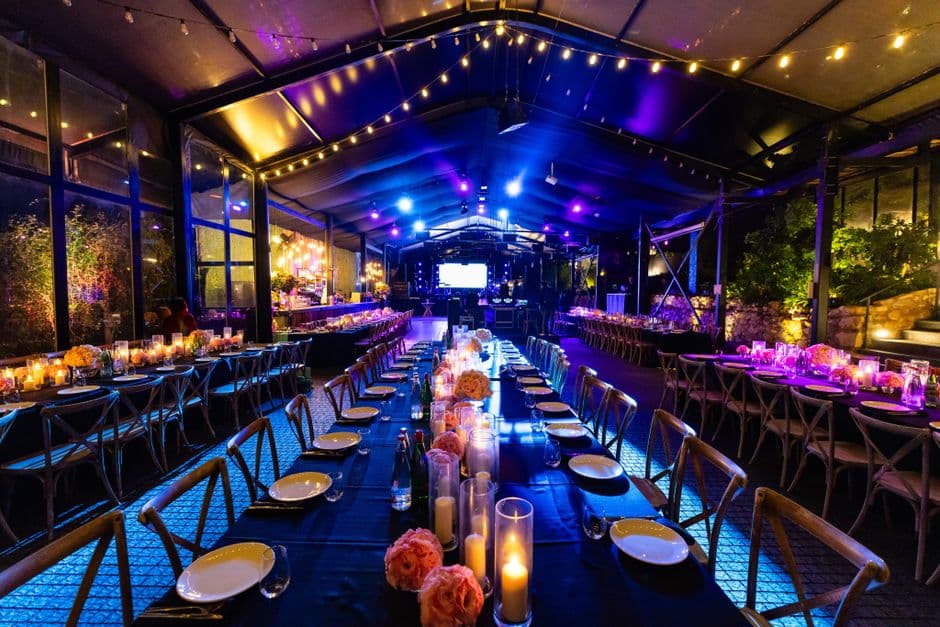
Once a corporate event has a real door, a client launch, a paid workshop, an awards night, a ticket does three jobs a spreadsheet can't. It confirms a head, it captures the details you need (dietaries, company, plus-ones), and it becomes the guest list you check at the door. One ticket, one name, one scan, no bouncer squinting at a printed page.
If you're charging, or collecting a staff contribution, decide who covers the booking fee on purpose. On Ticketted it's a flat 3.95% + 95c per ticket, shown before checkout, so a $40 seat reads as $40-something instead of ballooning at the card form and making your own staff think finance is skimming. There's no monthly subscription, which is handy when you run a handful of events a year rather than a hundred, and a free internal RSVP is genuinely $0.
When you don't need any of this
Here's the part I'm contractually obliged to talk myself out of a signup for: most corporate events don't need a ticketing platform, and a lot don't need much of a plan.
If it's a team of eight, the best corporate event idea in this entire post is a booked table at a good restaurant and zero admin. The venue does your "event management" for free, the RSVP is a Teams thread, and the budget is a company card. You only need real RSVPs, a headcount, and ticketing once the numbers get big enough that a spreadsheet stops scaling, roughly the point where you can't picture everyone coming. Below that, spend the energy on picking a place with good food, not on tooling.
Corporate event FAQ
What is a corporate event? Any event a business runs for its people, clients, or partners, rather than the general public. That covers a huge range: team days, client dinners, product launches, conferences, awards nights, and staff parties. The common thread is a business goal behind it, morale, sales, brand, or celebration, not just a good night out.
How do you plan a corporate event? Start with the goal and the headcount, then work backwards: pick a date and venue that fit the number, set a per-head budget, lock RSVPs early so the caterer has a firm count, and assign one owner so decisions don't stall. For a full-day event, build a run sheet. The order matters, most corporate-event stress comes from picking the venue before the number.
How do you make a corporate event fun? Give people something to do together and something to talk about, then get out of the way. Shared activities (a class, a game, a good meal) tend to work better than forced icebreakers, and a clear finish time helps, because the best corporate events end while people still wish they hadn't.
How much does a corporate event cost per person in Australia? Anywhere from around $30 a head for a casual team lunch to several hundred for a venued dinner with catering, drinks and entertainment. The big swing factors are the venue, whether you're serving alcohol, and headcount. Set a per-head number first, and if it's a staff function, keep the ATO's minor-benefits exemption in mind: staying under $300 per head may qualify, subject to its conditions.
What should you wear to a corporate event? Follow the dress code on the invite, and if there isn't one, add one, because "smart casual" means six different outfits and one person in a suit. For a client or evening event, business or cocktail; for a team day, whatever suits the activity. Telling people what to wear is a small kindness that saves a lot of morning-of texts.
Do I need to sell tickets for a corporate event? Only if it helps you run it. For an internal function you're more likely to collect RSVPs and a staff contribution than sell tickets. For a bigger client event, a paid workshop or an awards night, a ticket doubles as your headcount and your guest list, which is worth it once the numbers outgrow a spreadsheet.
Still stuck on the logistics?
Pick the goal, match the event to it, lock the headcount early, and a corporate event mostly runs itself. If yours has grown into the sort of thing that needs real RSVPs, a headcount, or tickets and a guest list for a client night, that's the bit we can help with, flat fee, all-in, money in your account as sales come in.
Give us a call on 0452 590 455 or flick us an email at support@ticketted.com. We'll help you sort the ticketing. We'll leave the trust falls to someone with better insurance.
Keep reading

40th Birthday Party Ideas: Themes, Surprise and Cost
40th birthday party ideas that go past the themes: plan a surprise, sort the guest list and RSVPs, decide who pays, and the Australian liquor and budget bits.

Kids Birthday Party Ideas: Themes, Headcount and Cost
Kids birthday party ideas that go past the themes: pick the guest list first, get an RSVP the caterer can trust, sort who pays, and a rough Australian budget.
18th Birthday Party Ideas: Themes, Guest List and Grog
18th birthday party ideas that go past the themes: pick the size, stop gatecrashers with a guest list, handle a mixed-age crowd and the alcohol law, and cover the cost.
More where this came from
Ticketted guides on pricing, payouts and packing rooms out, straight to your inbox. No spam, unsubscribe anytime.
No spam, unsubscribe at any time.